skip to main |
skip to sidebar
I think, of all the stories I've addressed so far, Ender's Game, by Orson Scott Card, is more science fiction than any other. This applies from a classical-definition-of-science-fiction standpoint (it's a book about alien invasions in the future with spaceships and stuff), and from the standpoint of my own definition of science fiction, for reasons that I'll talk about in a paragraph or two. What makes Ender's Game most notable, however, is how elegantly it's able to represent the way in which science fiction's proclivity for the former enables it to clearly convey the latter.

In my opinion, Ender's Game represents one of the most comprehensive studies of morality (in particular, the moral laws that govern the use/abuse of power by authority figures) that has ever been written into fiction. However, the plot that sustains this fascinating philosophical exercise is, on its surface, utterly sophomoric. Ender Wiggin, a child of six, is inducted by the military into "Battle School," a place for children like him to be trained into the generals that will fight off a potential invasion by the "Buggers," a race of violent, insect-like aliens. As Gerald Jonas wrote in his (very positive) review of the book for the New York Times, it "sounds like the synopsis of a grade Z, made-for-television, science-fiction-rip-off movie."
"What?" you think. "It's a Wonderful Life is definitely NOT science fiction. Why are you even bothering to ask?" Well, I do think it's science fiction, and here's why:
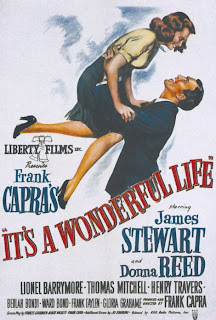
It honestly doesn't take much to begin to imagine It's a Wonderful Life in science fiction terms. The angels, for example, taken out of their spiritual context, become an advanced extraterrestrial race. In fact, even within their spiritual context, they are still a race of enormously powerful beings from outside the Earth—literally, an advanced extraterrestrial race. They use their powers to take human form and to transport George Bailey to an alternate universe in which he had never been born; both of these plot devices are firmly established within the science fiction realm. With these things in mind, why ISN'T It's a Wonderful Life science fiction?
As much as it pains me to say it, Avatar is indeed science fiction.

It was trying pretty hard not to be science fiction, though. Its characters, you may have noticed, were pretty weak. And its plot definitely didn't need to be science fiction to get its message across; numerous people have noted that the plots of Avatar, Dances with Wolves, and Disney's Pocahontas seem to have been created by filling in the same Mad Libs sheet.
So what is it that makes Avatar science fiction? In short, the "avatar" concept. By including this concept in the film, James Cameron created a reality that asks the question "What makes us human?" And it asks the question really, really well.


